

Why General Labor in Siding Is One of the Most Accessible Trades Right Now
General labor in siding is one of the fastest-growing entry points into the construction trades — and it’s hiring right now.
Here’s a quick look at what you need to know:
| Topic | Key Fact |
|---|---|
| Starting pay | ~$15/hour for beginners |
| Experienced pay | $23 – $40/hour |
| Experience required | Often none — on-the-job training available |
| Job growth | 12.7% projected year-over-year through 2024 |
| Typical schedule | Monday – Friday, 7am – 5pm |
| Physical demand | High — lifting, climbing, outdoor work |
If you want consistent work, a real paycheck, and a skill set that grows with you, siding labor checks all three boxes.
The construction industry is adding hundreds of thousands of jobs. Many siding companies are actively hiring people with zero prior experience — they’ll train you on-site. You don’t need a degree. You don’t need a long resume.
What you do need is reliability, a willingness to work hard, and the ability to show up ready to go.
This guide covers everything — from daily tasks and pay rates to how to land your first siding job — so you can make an informed decision fast.
What Does General Labor in Siding Entail?
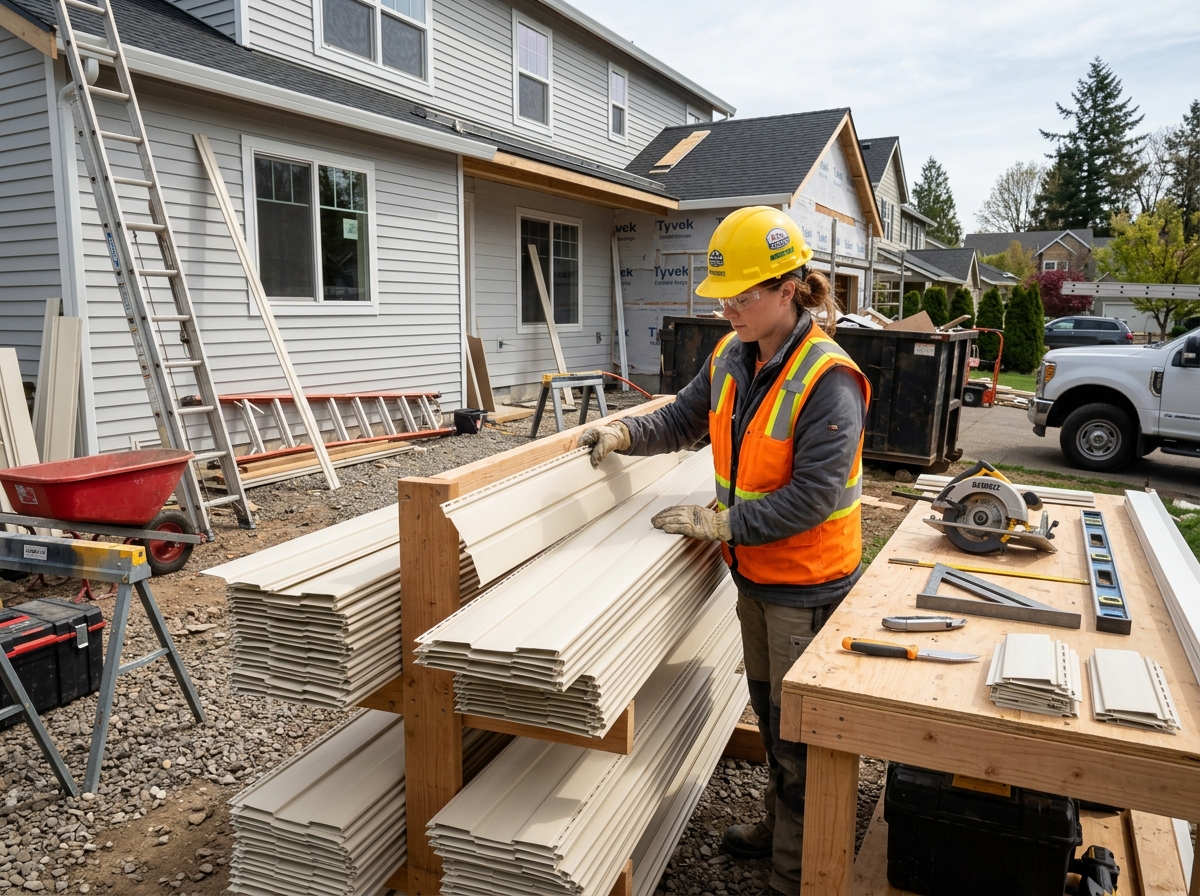
When we talk about general labor in siding, we are describing the backbone of the exterior remodeling industry. While the “lead installer” or “foreman” focuses on the technical precision of the final layout, the general laborer ensures the entire operation runs like a well-oiled machine.
At its core, this role is about material management and site preparation. You are the first one to handle the product and the last one to ensure the homeowner’s yard looks better than when you arrived. If you are looking for how to land general labor jobs without breaking a sweat, the secret is demonstrating that you can manage these foundational tasks with efficiency and a positive attitude.
The daily grind involves more than just “holding a ladder.” You will be responsible for:
- Material Handling: Moving heavy boxes of siding, soffit, and fascia.
- Site Preparation: Removing old, rotted boards or existing siding (often called the “tear-off” phase).
- Debris Removal: Constantly clearing the perimeter of the house to prevent accidents and keep the site professional.
- Equipment Maintenance: Keeping saws, levels, and ladders in good working order.
Understanding the materials is also key. For instance, vinyl siding is among the most popular siding materials because it is incredibly durable and comes in a massive variety of designs. As a laborer, you’ll quickly learn how vinyl reacts to temperature and how to handle it without causing cracks or warps.
Daily Responsibilities for General Labor in Siding
A typical day for us starts early, usually around 7:00 AM. The first task is often loading the truck at the warehouse or unloading a fresh shipment at the job site. This isn’t just about muscle; it’s about organization. You need to know which pieces—like the starter strips or J-channels—need to come off the truck first.
Once on-site, the laborer’s focus shifts to support. You’ll be setting up scaffolding and pump jacks, ensuring they are level and secure. Throughout the day, you’ll be loading and unloading materials as the crew moves around the house. You’ll also assist the foreman by measuring panels and making initial cuts. If the lead installer needs a 12-foot piece of vinyl with a specific notch, it’s your job to have it ready before they even step off the ladder.
Common Materials and Tools
To succeed in general labor in siding, you need to become familiar with the “alphabet soup” of materials and the “toolbox” of the trade.
Materials we work with most:
- Vinyl Siding: Lightweight, easy to cut, and very common in residential areas like New York or the USA.
- Fiber Cement: Much heavier and requires special blades, but offers incredible fire resistance.
- Cedar Wood: A premium material that requires careful handling to avoid splitting.
- Seamless Steel: Often used in regions with extreme weather; it’s tough and requires specialized cutting tools.
The Essential Tool Belt:
- Power Saws: For quick, clean cuts on siding panels.
- Brake Operation: Learning to use a “brake” to bend aluminum trim for windows and doors is a high-value skill.
- Tape Measures and Hammers: The bread and butter of any construction role.
- Utility Knives: Used constantly for scoring vinyl or cutting house wrap.
Requirements and Skills for Siding Installation Jobs
You don’t need a PhD to work in siding, but you do need “trade smarts.” This involves a mix of physical capability and mental alertness. When exploring career paths across industries, siding stands out because it rewards those who are observant and quick on their feet.
Physical Demands of General Labor in Siding
We won’t sugarcoat it: this is a workout. A standard box of siding can weigh 50 lbs, and some fiber cement products require two people to lift safely, reaching up to 90 lbs.
- Stamina: You’ll be on your feet for 8 to 10 hours a day, often on hard concrete or uneven turf.
- Heights: If you are afraid of ladders, this might not be the career for you. Siding involves working on two or three-story homes regularly.
- Weather: Whether it’s the humidity of Malaysia or the heat of Muscat, Oman, siding work happens outdoors. You’ll be exposed to sun, wind, and the occasional light rain.
- Dust Protection: Cutting certain materials creates fine dust, so wearing a mask and eye protection is non-negotiable.
Essential Qualifications and Experience
Most entry-level positions require a high school diploma or GED. However, your “soft skills” often matter more than your resume. Reliability is the number one trait employers look for. If you have a valid driver’s license and can get yourself to the job site on time every day, you are already ahead of 50% of the competition.
Basic construction knowledge helps, but we often look for a “team-oriented” attitude. Siding is a puzzle that requires multiple people to solve. If you’re wondering where is the best place to look for a job, start with local contractors who emphasize on-the-job training. They value your willingness to learn over your previous years of experience.
Salary Expectations and Career Growth
The financial upside for general labor in siding is surprisingly high compared to other “unskilled” labor roles. Because the work is specialized and physically demanding, the pay reflects the effort.
Statistics show that the construction industry is booming, with nearly 800,000 jobs expected to be added by 2024. In the siding sector specifically, we are seeing a 12.7% projected year-over-year job growth. This means if you start today, your job security is exceptionally high.
- Starting Pay: Beginners can expect to start around $15 to $20 per hour.
- Experienced Laborers: Once you know the ropes, wages typically jump to $23–$32 per hour.
- Overtime: Most siding crews work 40+ hours, and overtime pay (time and a half) can significantly boost your weekly take-home pay.
If you are looking for the best manufacturing and labor jobs near you, siding offers a unique blend of high demand and a clear path to higher earnings.
Advancement Opportunities in the Siding Industry
The beauty of starting as a laborer is that you aren’t stuck there. The career ladder in siding is very sturdy:
- Crew Leader: You manage the daily tasks of the other laborers.
- Siding Foreman: You oversee the entire technical installation and manage the client relationship.
- Project Manager/Field Engineer: You move into the office or a supervisory role, coordinating multiple job sites.
- Business Ownership: Many of the most successful siding company owners started exactly where you are—carrying boxes and cleaning up scraps.
Getting Started: Training and Safety Protocols
Safety isn’t just a suggestion in this industry; it’s a requirement for staying employed. Because we work at heights and with sharp tools, following OSHA (Occupational Safety and Health Administration) guidelines is critical.
When you start, you’ll learn about fall arrest systems. This includes harnesses and lanyards that keep you safe if you lose your footing on a roof or high ladder. You’ll also learn about the importance of energy efficiency. For example, knowing how to choose replacement windows and how they integrate with the siding’s moisture barrier (like Tyvek) makes you a more valuable worker.
How to Start a Career as General Labor in Siding
If you’re ready to jump in, here is the roadmap:
- Apply for Entry-Level Roles: Look for job titles like “Siding Helper,” “Construction Laborer,” or “Installer Trainee.”
- VSI Trainee Program: The Vinyl Siding Institute offers programs that teach you the basics of proper installation. Having this on your application shows you’re serious.
- Network with Local Contractors: In places like Karachi or Qatar, word of mouth is huge. Visit active job sites (safely) and ask if they need a hand.
- Build a Basic Tool Kit: You don’t need everything at once, but having your own tape measure, hammer, and utility knife shows initiative.
- Demonstrate Reliability: Show up 10 minutes early, stay off your phone, and ask, “What’s next?”
Frequently Asked Questions about General Labor in Siding
What is the average starting pay for a siding laborer?
In the USA and Middle East markets, starting pay generally hovers around $15 to $20 per hour. However, this can vary based on the cost of living in your specific city. With overtime, many entry-level workers earn a very comfortable living right out of the gate.
Do I need prior experience to get hired in siding?
Not necessarily. Many companies prefer to hire “green” workers who have a strong work ethic because they can train them to follow their specific quality standards. If you have basic hand tool experience, you are qualified to apply.
What are the pros and cons of siding work vs. general construction?
Pros:
- You see immediate results (the house looks brand new in days).
- It’s more specialized than general labor, leading to higher pay.
- Consistent, year-round work is often available.
Cons:
- Heavy exposure to the elements (heat/cold).
- Constant ladder work can be tiring.
- It can be repetitive compared to custom carpentry.
Conclusion
At Elite Innovation LLC, we believe that a career in general labor in siding is more than just a job—it’s a path to financial independence and a respected trade. Whether you are in Muscat, Oman, New York, or Malaysia, the demand for skilled exterior workers is at an all-time high.
You’ll build hands-on skills, enjoy the satisfaction of transforming homes, and join an industry that offers massive stability. If you’re ready to stop looking and start working, find your next career opportunity here and take the first step toward a better future. The boards are waiting—don’t get bored, get to work!