


Why Electrical Helper Labor Jobs Are One of the Best Entry Points Into the Trades Right Now
Electrical helper labor jobs are entry-level positions where you assist licensed electricians with wiring, installations, and maintenance on commercial and residential job sites. If you’re looking for stable, hands-on work that pays well and leads somewhere, here’s a quick snapshot:
What to Expect at a Glance:
| Factor | Details |
|---|---|
| Pay Range | $18.00 – $23.00/hr depending on location |
| Experience Needed | 0-2 years (most roles entry-level) |
| Education | High school diploma or GED |
| Physical Demand | High – lifting up to 51 lbs, climbing, outdoor work |
| Career Path | Helper → Apprentice → Journeyman → Master Electrician |
| Open Jobs | 31,000+ electrician roles currently listed |
The trade labor market is busy right now. There are over 31,000 open electrician-related jobs available, with openings in cities like Baltimore, San Diego, Orlando, and beyond.
For anyone tired of inconsistent gig work or jobs with no upside, electrical helper roles offer something different – regular hours, real benefits like health insurance and 401(k), and a clear path to higher pay. Many positions are contract-to-hire, meaning you can go from day laborer to full-time employee with advancement opportunities in a matter of months.
This list breaks down everything you need to know to find and land one of these jobs today.
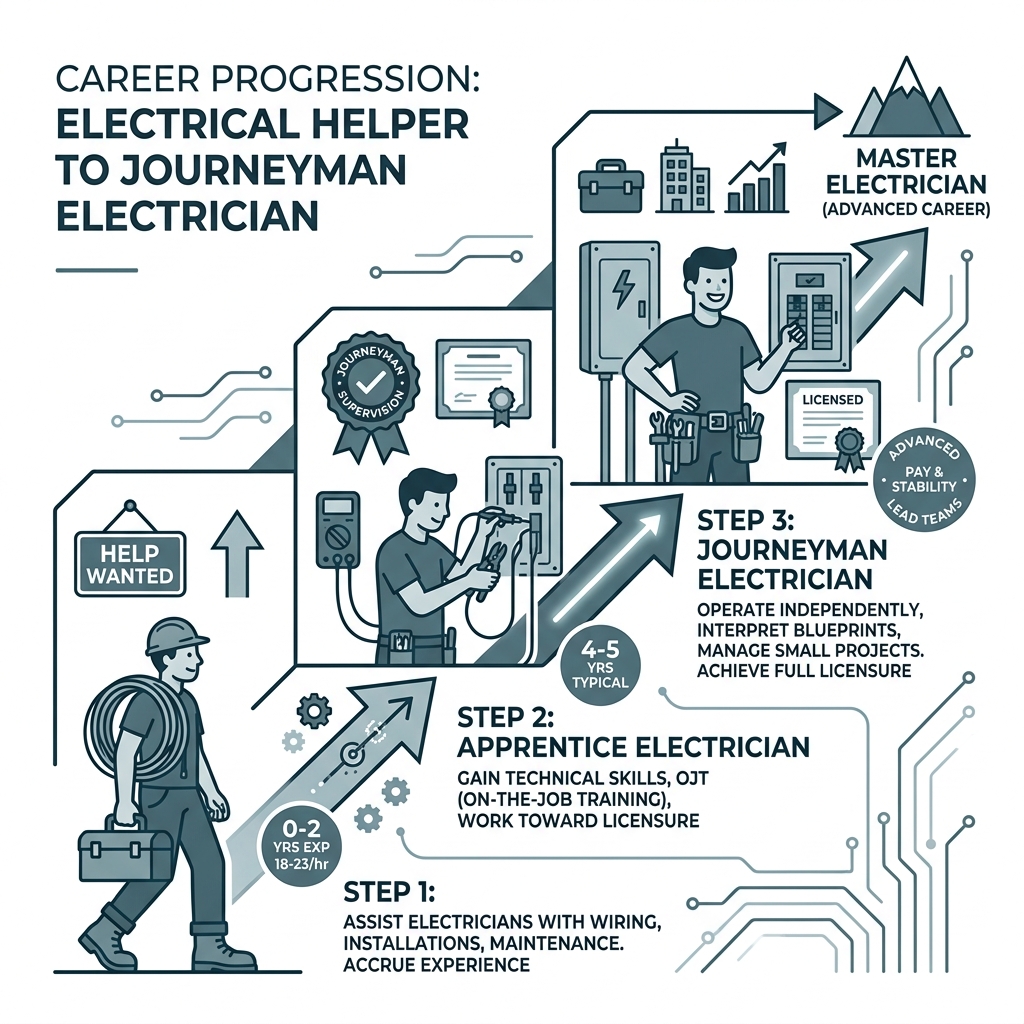
Electrical helper labor jobs terminology:
Core Responsibilities of Electrical Helper Labor Jobs
When we talk about electrical helper labor jobs, we aren’t just talking about someone who hands over a screwdriver. You are the engine room of the job site. Your primary goal is to support licensed electricians so that projects stay on schedule and under budget.

One of the most common tasks you’ll tackle is wiring installation. This isn’t just about plugging things in; it involves measuring, cutting, and bending conduit—the metal or plastic tubing that protects electrical wires. You will often find yourself pulling heavy cables through these conduits, which is a great way to save money on a gym membership while getting paid.
Beyond the heavy lifting, you’ll assist in installing fixtures like outlets, switches, and lighting. In large-scale commercial projects, such as those in New York or Baltimore, you might also help set up temporary power systems for the construction crew. This ensures the site has light and power before the permanent grid is even connected.
Maintenance and repair are also big parts of the gig. You might help replace old components or assist in testing systems using specialized meters. And let’s not forget the “glamour” of the job: site cleanup. Keeping the work area orderly isn’t just about aesthetics; it’s a critical safety requirement. If you want to know more about the basics of entering this field, check out our guide on how to land general labor jobs without breaking a sweat.
Essential Tools for Electrical Helper Labor Jobs
While the company often provides the big machinery, most electrical helper labor jobs require you to bring a personal tool belt. This belt can weigh up to 30 pounds, so make sure your pants are buckled tight! Essential items include:
- Wire Strippers: For removing insulation from electric wires without damaging the core.
- Multimeters: Used to measure voltage, amperage, and resistance (don’t worry, we’ll teach you how to read them).
- Power Drills: For mounting boxes and brackets.
- Conduit Benders: To get those pipes around corners perfectly.
- Safety Gear: This includes your hard hat, steel-toed boots, and high-visibility vest.
Safety Protocols in Electrical Helper Labor Jobs
In electricity, “oops” isn’t an option. Safety is our top priority. Every helper must adhere to strict OSHA standards and company-specific protocols. This includes:
- PPE (Personal Protective Equipment): Never step onto a site without your gear.
- Lockout-Tagout (LOTO): Ensuring that dangerous machines are properly shut off and not started up again prior to the completion of maintenance work.
- Hazard Reporting: If you see a frayed wire or a shaky ladder, you say something immediately.
- Tool Care: Using the right tool for the job and keeping it in good working order prevents accidents.
Essential Qualifications and Physical Demands
You don’t need a PhD to start in electrical helper labor jobs, but you do need a solid foundation. Most employers require a high school diploma or a GED. What we really look for, however, is mechanical aptitude—the ability to understand how things work and how to put them together.
The physical demands are real. You need to be able to lift at least 51 pounds regularly. You’ll be standing, kneeling, and bending for long periods. If you have a fear of heights, you might want to reconsider; some jobs require working on ladders or scaffolding up to 90 feet in the air.
Color vision is also essential. Why? Because wires are color-coded. Connecting the “pretty red one” to the “bright green one” by mistake can lead to a very bad day for everyone involved. For a broader look at how these roles fit into the wider world of work, see our guide to different types of jobs across industries.
Physical Working Conditions
Be prepared for the elements. Whether it’s the humidity of Orlando or the winter winds of New York, electrical helper labor jobs take place both indoors and outdoors. You might find yourself in restricted spaces (crawl spaces are a helper’s best friend) or on active, noisy construction sites.
If you are used to loading, unloading, and general staff work, you’ll find the physical pace familiar, though the technical requirements are higher.
Impact of Prior Construction Experience
While many roles are entry-level, having even six months of construction experience can put you at the top of the resume pile. Proficiency with hand tools and the ability to read basic blueprints are huge pluses. If you’ve spent time as a siding laborer, you already understand site safety and the importance of punctuality—skills that translate perfectly to the electrical trade.
Salary, Benefits, and Top Locations
The pay for electrical helper labor jobs is quite competitive compared to other entry-level labor roles. In the USA, you can expect to earn anywhere from $18.00 to $23.00 per hour.
| Location | Typical Hourly Range | Annual Equivalent (Approx.) |
|---|---|---|
| Baltimore, MD | $20.00 – $23.00 | $41,600 – $47,840 |
| Orlando, FL | $18.00 – $21.00 | $37,440 – $43,680 |
| San Diego, CA | $18.00 – $19.50 | $37,440 – $40,560 |
| New York, NY | $19.00 – $24.00 | $39,520 – $49,920 |
Beyond the hourly wage, many of these positions come with full benefit packages, including:
- Health Insurance: Medical, dental, and vision coverage.
- 401(k) Plans: Often with company matching.
- Paid Time Off (PTO): Including holidays and sick leave.
- Training: Many companies offer on-the-job training that counts toward your apprenticeship hours.
If you’re looking for work in your specific area, we have resources on finding the best manufacturing and labor jobs near you.
Domestic Job Markets
In the United States, the demand is soaring. In New York, there are dozens of openings for helpers on large residential high-rises. Over in San Diego, the shipyard industry needs helpers to pull cable on massive vessels. Baltimore is currently a hotspot for telecom and electrical hybrid roles, where helpers support EV charging station installations and fiber optic upgrades.
International Opportunities
Our reach extends far beyond the USA. We see massive demand for electrical talent in the Middle East.
- Saudi Arabia: Huge infrastructure projects like NEOM are creating thousands of vacancies for electrical labor.
- Qatar: Continued urban development in Doha requires skilled helpers for commercial maintenance.
- Oman: Muscat has a growing market for electrical helpers in the industrial and oil sectors.
- Malaysia & Karachi: Rapid industrialization means constant openings for those willing to learn the trade.
How to Apply and Advance Your Career
Applying for electrical helper labor jobs requires more than just a “can-do” attitude. You need to have your paperwork in order. Most employers will ask for:
- Valid Driver’s License: You need to get to the site, often before the sun comes up.
- Birth Certificate or Passport: To prove eligibility to work.
- High School Diploma/GED: A copy of your transcripts is often requested.
- Drug Screening: Most sites require a clean test for safety reasons.
When you’re ready to start your search, knowing where is the best place to look for a job can save you weeks of frustration. Focus on trade-specific boards and local union listings.
Career Progression Paths
The beauty of starting as a helper is that it’s just the beginning.
- Electrical Helper: You learn the tools and the “lay of the land.”
- Apprentice: You enter a formal training program (often 4 years) that combines classroom learning with paid work.
- Journeyman: Once you pass your state exam, you can work independently and your pay jumps significantly.
- Master Electrician: After several years as a journeyman, you can take another exam to run your own projects or company.
Frequently Asked Questions about Electrical Helper Labor Jobs
Is an electrical helper role considered entry-level?
Yes! Most electrical helper labor jobs are designed for people with little to no prior experience in the electrical field. As long as you have a high school diploma and a strong work ethic, you are a candidate.
What is the difference between an electrical helper and an apprentice?
A helper is generally a labor-focused role that assists with the physical work. An apprentice is enrolled in a formal, state-recognized program that leads to licensure. Many people start as helpers to see if they like the trade before committing to a multi-year apprenticeship.
Do I need my own tools to start an electrical helper job?
Usually, yes. While the company provides heavy equipment (like ladders and generators), you will likely be expected to have a basic set of hand tools and a tool belt. Some companies offer a “tool allowance” or payroll deduction to help you buy them.
Conclusion
At Elite Innovation LLC, we believe that the trades are the backbone of the global economy. Whether you are in Muscat, New York, or Karachi, electrical helper labor jobs offer a path to a recession-proof career, competitive pay, and the satisfaction of building something real.
The transition from a general laborer to a skilled tradesperson starts with that first step onto the job site. If you’re ready to power up your career and move into a high-growth industry, now is the time to act. Explore high-paying opportunities in the energy sector and start your journey toward becoming a master of your craft today.