

What Is Loading Unloading Work — and How Do You Get Started?
Loading unloading work is one of the most in-demand categories of blue-collar employment across warehousing, transportation, retail, and manufacturing industries.
If you’re looking for quick answers, here’s what you need to know upfront:
- What it is: Physical labor involving moving goods on and off trucks, containers, railcars, and storage facilities
- Who hires: Moving companies, warehouses, freight terminals, retailers, and manufacturers
- Pay structure: Typically hourly, with rates varying by location, employer, and experience
- Entry requirements: Most roles require no formal degree — physical fitness and reliability matter most
- Growth potential: Entry-level positions can lead to roles like lead mover, warehouse supervisor, or equipment operator
This type of work keeps supply chains moving. Every package shipped, every piece of furniture delivered, every pallet moved through a warehouse — it all depends on skilled laborers doing this job well.
The physical demands are real. Moving furniture and heavy boxes is the most injury-prone part of any move or logistics operation. That’s why understanding the right techniques, equipment, and safety rules isn’t just helpful — it’s essential for staying employed long-term and avoiding injuries.
Whether you’re looking for your first job in this field or trying to build a more stable career in industrial labor, this guide covers everything you need to know — from day-to-day responsibilities to safety standards to career growth.
Understanding the Scope of Loading Unloading Work
At its heart, loading unloading work is the backbone of the global economy. Whether we are talking about a bustling port in Qatar, a massive distribution center in New York, or a manufacturing plant in Karachi, the movement of goods is a constant necessity. This field, often categorized under material handling, involves the physical transfer of items from one point to another—usually between a stationary storage area and a transport vehicle.
The job description of loader-unloaders covers a wide variety of tasks. It isn’t just about “lifting heavy things.” It involves freight handling, where you might be dealing with palletized goods in a warehouse, or furniture moving, which requires a more delicate touch and specialized wrapping techniques to protect sentimental items.
In many regions, including the Middle East and the USA, this role is part of a broader category of loading-unloading-and-general-staff. These workers are employed across several key sectors:
- Warehouse Sectors: Storing goods for retail or wholesale.
- Transportation Logistics: Working at hubs where trucks and trailers are constantly arriving and departing.
- Retail Distribution: Ensuring stock moves from central hubs to individual store shelves.
- Manufacturing: Moving raw materials into the plant and finished products out to the market.
Core Responsibilities of Material Handlers
While the primary goal is moving items, the daily grind involves several specific duties. According to data regarding material handling in Canada, the role is highly active. We often find ourselves:
- Sorting Goods: Organizing items by destination or type.
- Packing and Unpacking: Ensuring items are safely housed in boxes or crates.
- Weighing and Counting: Maintaining inventory accuracy by verifying load weights and item counts.
- Operating Equipment: Using conveyors, winches, and other loading devices to move materials that are too heavy for manual labor.
Employment Sectors for Laborers
The beauty of this career path is the variety of environments available. You might find yourself in a quiet storage facility one day and a high-energy marine terminal the next. Moving companies are a major employer, especially for those who prefer residential work. Meanwhile, wholesale warehouses and railway yards offer more industrial settings where the scale of the loading unloading work is much larger, involving massive shipments of raw materials like grain, coal, or liquid petroleum.
Essential Equipment and Tools for Efficiency
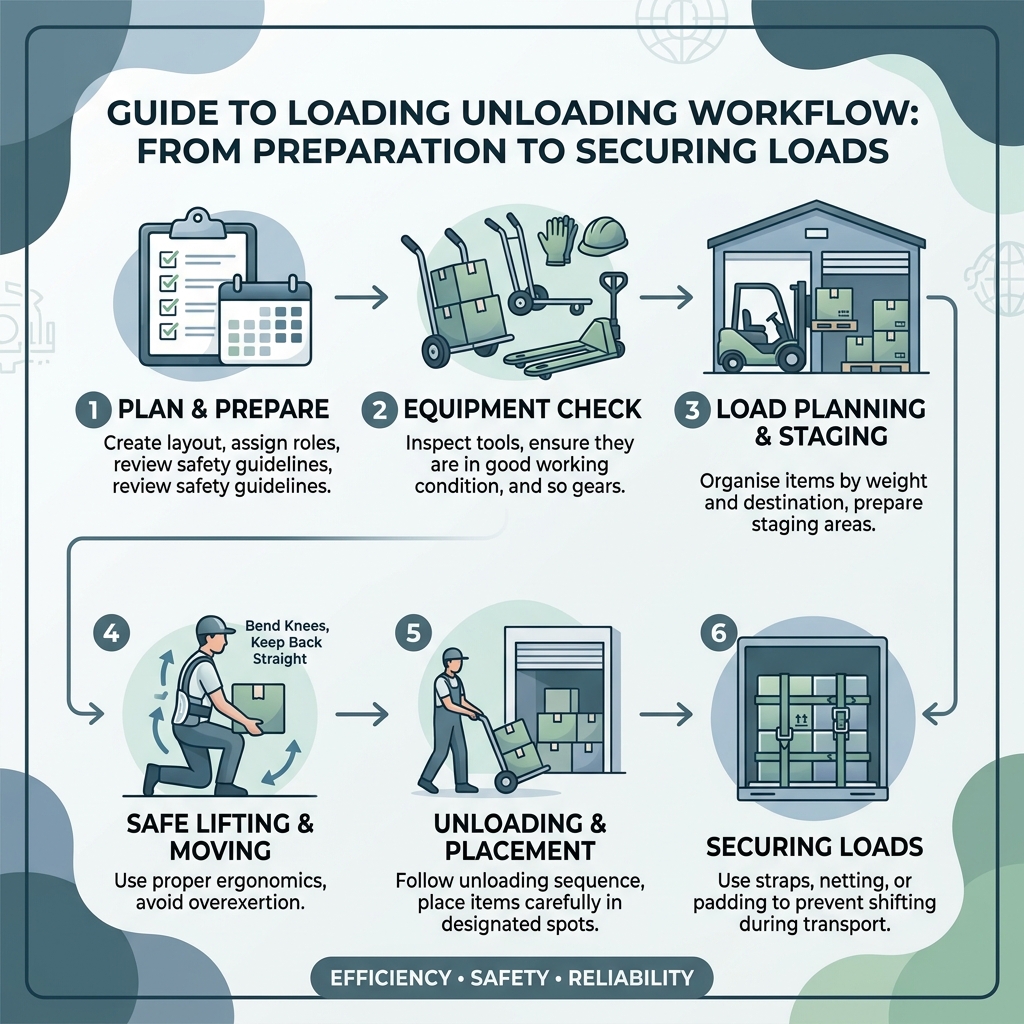
To do the job right, we don’t just rely on muscle; we rely on the right tools. Using professional equipment isn’t just about making the job easier—it’s about protecting the goods and our own bodies.

One of the most critical pieces of machinery in this industry is the powered industrial truck, more commonly known as the forklift. These machines allow us to move thousands of pounds with precision. However, manual tools are just as important for smaller-scale moves.
| Feature | Manual Lifting | Mechanical Assistance (Forklifts/Jacks) |
|---|---|---|
| Weight Capacity | Limited (usually up to 50 lbs per person) | High (thousands of pounds) |
| Speed | Slower for bulk items | Very fast for palletized goods |
| Risk of Strain | High (back and joint issues) | Low (if operated correctly) |
| Precision | Excellent for tight spaces | Requires clear paths and turning radius |
Beyond the heavy machinery, we use a variety of “soft” tools to ensure a damage-free experience. Moving blankets and furniture wrap are essential for preventing scratches. For heavy appliances, we use furniture dollies and ramps. To keep the load from shifting during transit, ratchet straps are a non-negotiable requirement. At the warehouse level, dock levellers bridge the gap between the building and the trailer, ensuring a smooth path for pallet jacks.
Role of Forklift Operators in Professional Loading
Forklift operation is a specialized skill that requires training. In the USA, the 29 CFR 1910.178 standard is the most commonly cited regulation in material handling. It dictates that operators must be trained and evaluated.
Safety is paramount here. Statistics show that forklift overturns represent about 25% of all forklift-related deaths. To prevent this, we focus on load stability and ensuring the forklift’s overhead guards are intact. Following forklift loading and unloading safety protocols means always checking the capacity of the floor or trailer before entering and ensuring the work area is clear of debris.
Tools for Protecting Goods and Personnel
We believe that a safe worker is an efficient worker. This is why we advocate for the use of personal protective equipment (PPE). Grip gloves prevent slips, and back support belts can help remind us to use proper lifting form. On the vehicle side, wheel chocks and vehicle restraints are vital. They prevent “trailer creep” or accidental premature departure, which can be fatal if a loader is still halfway between the dock and the truck.
Safety Standards and Regulatory Compliance
Safety in loading unloading work isn’t just a suggestion—it’s the law. Whether we are following HSE loading guidance in the UK or OSHA standards in the US, the goal is the same: zero accidents.
Safety Protocols for Loading Unloading Work
A safe operation starts with a stable environment. We always ensure that loading activities are carried out on ground that is flat, firm, and free of potholes. Parking brakes must be applied to both the tractor and the trailer.
One of the most effective safety measures we use is a “key handover” system. By giving the truck keys to a yard marshal, we ensure the driver cannot accidentally pull away while we are still inside the trailer. Furthermore, segregating pedestrians from vehicle traffic with clear signage and barriers is a fundamental part of safe systems for loading operations.
Avoiding Common Hazards and Risks
The risks in this field are significant if protocols are ignored. Shifting loads can crush a worker when the trailer doors are opened. Working at height—such as on top of a load or on a loading dock—presents a fall risk. According to OSHA trucking industry hazards reports, many fatalities occur when a worker is struck by falling cargo, such as logs or lumber, that wasn’t properly secured. To avoid this, we always perform a pre-unloading inspection to see if the load has shifted during the journey.
Finding and Succeeding in the Industry
If you are looking to enter this field, the opportunities are vast. From the busy ports of Oman to the logistics hubs of Malaysia, there is a constant need for reliable labor.
To find the best roles, you should explore specialized job boards and tag/loading-and-unloading-jobs to see what is currently available in your area. Success in this industry isn’t just about muscle; it’s about reliability and a commitment to safety.
Career Paths in Loading Unloading Work
Many people start as entry-level laborers, but that is just the beginning. With experience, you can move into several specialized roles:
- Lead Mover: Managing a small crew and interacting with clients.
- Warehouse Supervisor: Overseeing the flow of goods and staff in a large facility.
- Logistics Coordinator: Planning the routes and schedules for shipments.
- Specialized Equipment Operator: Moving beyond forklifts to cranes or heavy loaders.
- Safety Officer: Ensuring the entire facility remains compliant with international standards.
Tips for Safe and Efficient Operations
To stand out as a professional, we recommend focusing on these three areas:
- Weight Distribution: Always load the heaviest items at the bottom and spread the weight evenly across the vehicle’s axles to maintain stability.
- Communication: Use clear hand signals and stay in constant contact with your team, especially when operating heavy machinery.
- Weather Awareness: In places like Qatar or Saudi Arabia, heat exhaustion is a major risk. In New York, ice and snow can make loading docks incredibly dangerous. Always adapt your pace and gear to the environment.
Frequently Asked Questions about Loading and Unloading Jobs
What are the physical requirements for loading unloading work?
You need to be in good physical condition. Most jobs require the ability to lift at least 50 pounds (23kg) repeatedly. Stamina is key, as you will likely be on your feet for 8 to 12 hours a day. Flexibility is also important for maneuvering in tight spaces like the back of a van or a storage container.
Do I need specific certifications to work as a loader?
For general labor, usually no. However, if you want to operate a forklift or other powered industrial trucks, you must have a certification. In the USA, this must be site-specific and compliant with OSHA. In other regions like the Middle East or Malaysia, local vocational certifications are often required.
How is pricing and pay typically structured for labor-only roles?
Most loading unloading work is paid by the hour. In the moving industry, companies often charge customers a minimum of two or three hours. For workers, this means you might have a “day rate” or an hourly wage. Specialized roles, like those in marine terminals or oil and gas loading, often command much higher pay due to the increased risk and technical skill involved.
Conclusion
At Elite Innovation LLC, we understand that loading unloading work is more than just a job—it’s a critical service that requires professionalism, skill, and an unwavering commitment to safety. Whether you are helping a family move into a new home or managing the offloading of a massive freight ship, the principles remain the same: protect the people, protect the goods, and keep the world moving.
The industry outlook remains strong as global trade continues to grow. By focusing on building a safety-first culture and mastering the use of modern equipment, you can turn a labor job into a long-term, rewarding career. For those ready to take the next step, check out the latest opportunities for loading-unloading-and-general-staff and start your journey today.