
Why Offshore Rotational Medic Positions Are Worth Considering in 2026
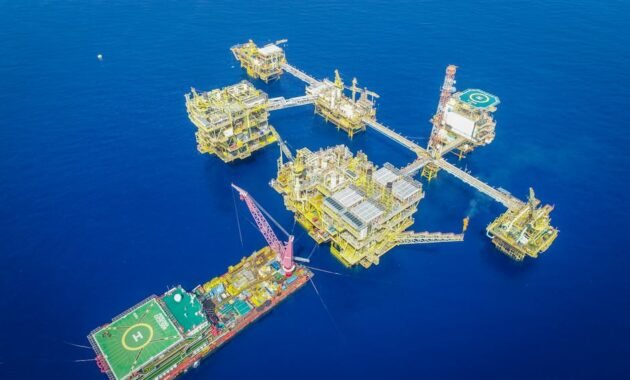
Offshore rotational medic positions are healthcare roles where medical professionals work in shifts — typically weeks on, weeks off — providing full-scope medical care on oil rigs, vessels, and remote industrial sites far from any hospital.
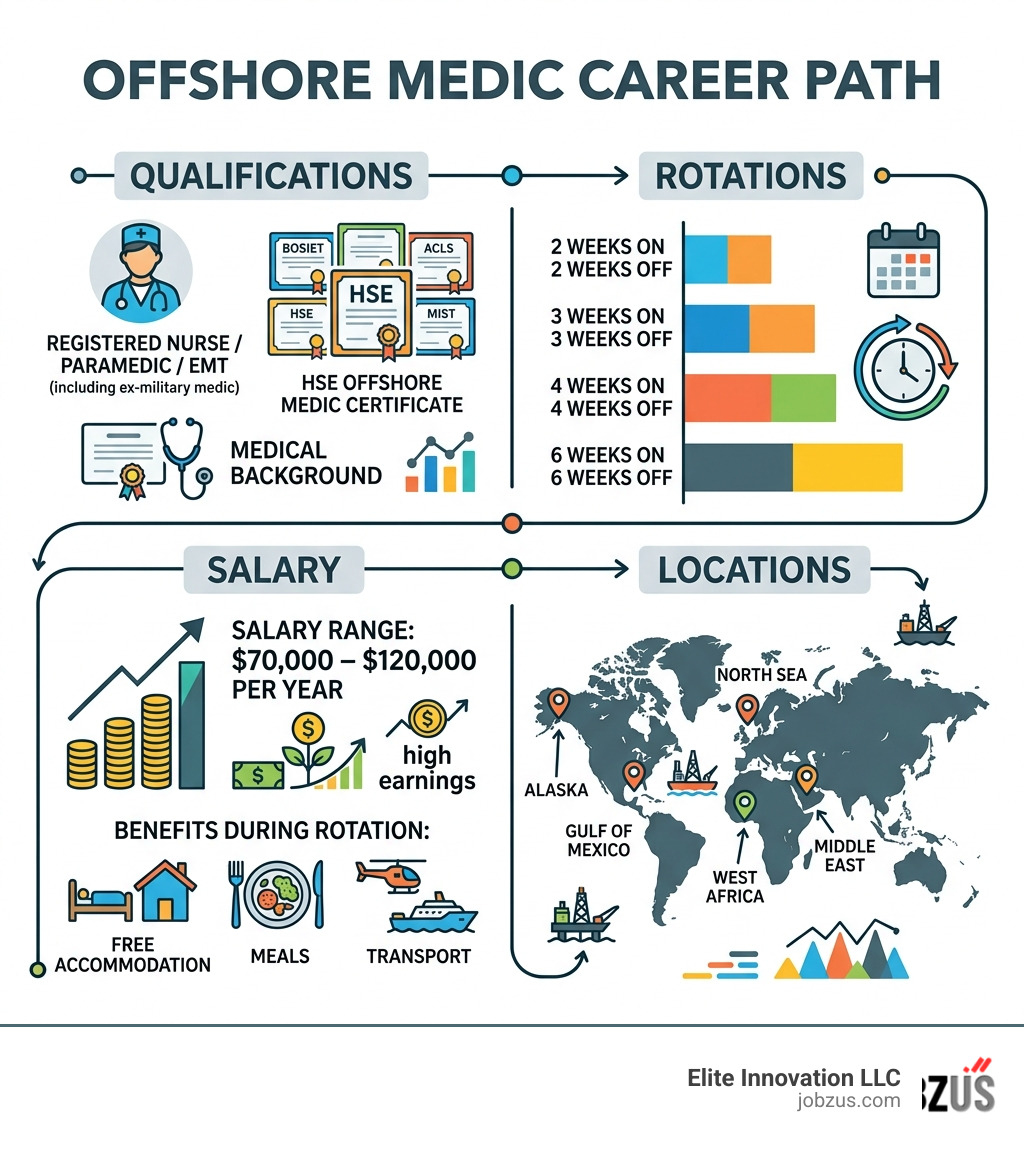
Here’s a quick snapshot of what these roles look like:
| Factor | Details |
|---|---|
| Who qualifies | Registered Nurses, Paramedics, EMTs, ex-military medics |
| Typical rotations | 2:2, 3:3, 4:4, or 6:6 weeks on/off |
| Salary range | $70,000 — $120,000 per year |
| Key certifications | BOSIET, ACLS, HSE Offshore Medic Certificate, MIST |
| Top locations | North Sea, Gulf of Mexico, Middle East, West Africa, Alaska |
| Benefits | Free accommodation, meals, and transport during rotation |
If you have a background in emergency care, remote medicine, or even military medical service, this career path could be a strong next move.
The appeal is straightforward. You work hard for a set number of weeks, then you go home — fully paid — for just as long. That kind of schedule is rare in healthcare. And the pay reflects the demands of the job.
The offshore medical field sits at the intersection of emergency medicine, primary care, and industrial safety. You’re not just treating injuries. You’re running a clinic, managing evacuations, conducting health inspections, and often making calls without a doctor physically present.
It’s not easy work. But for the right person, it’s one of the most rewarding and financially stable paths in healthcare.
This guide walks you through exactly how to make the transition — from your current medical background to your first offshore contract.
Explore more about offshore rotational medic positions:
Understanding the Role of an Offshore Medic
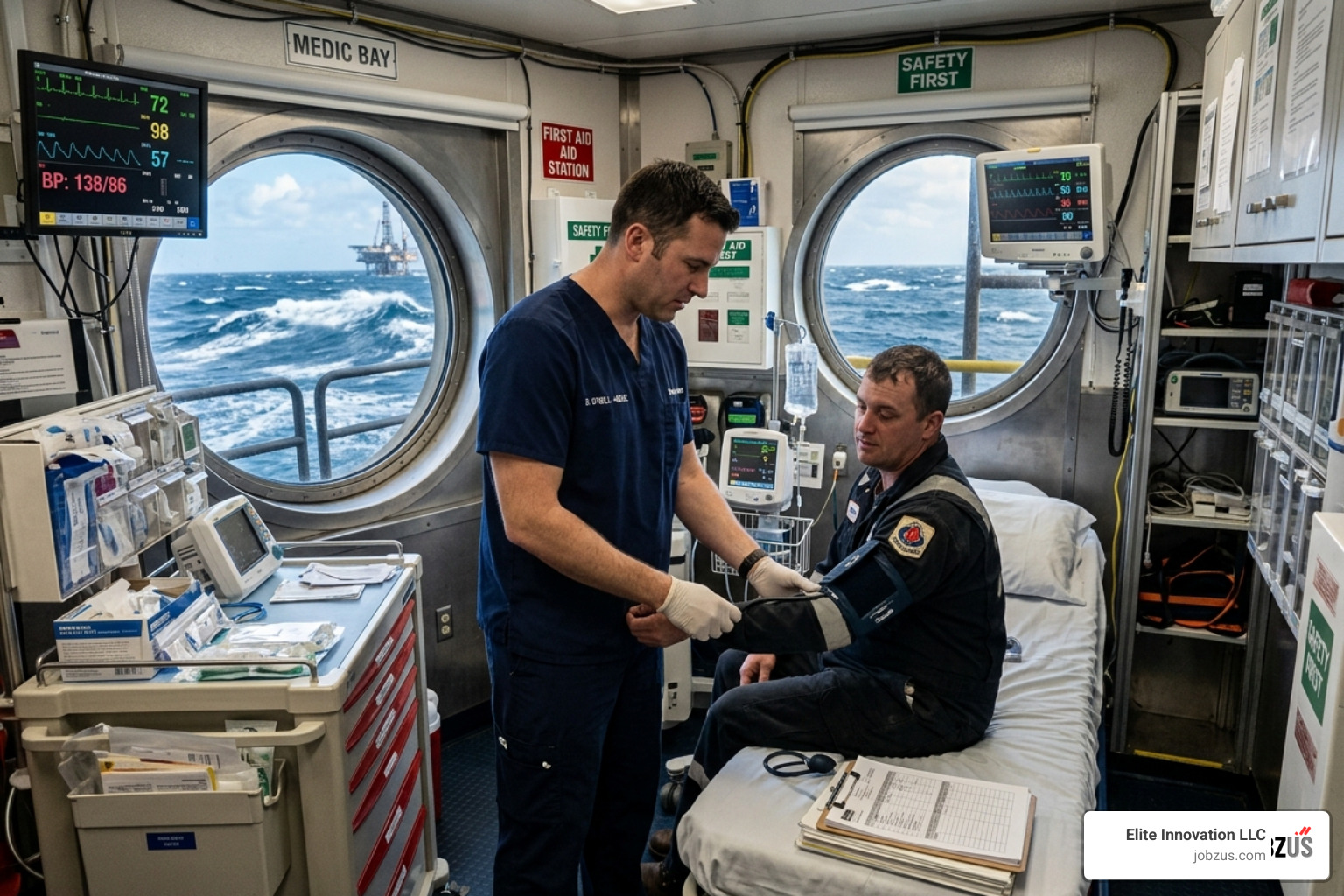
Transitioning into offshore rotational medic positions means moving from a team-based hospital or ambulance environment to a role defined by autonomous practice. In the middle of the ocean, you are the primary healthcare provider. Whether it’s a minor skin rash or a major cardiac event, the crew looks to you first.
The scope of practice for offshore medics is surprisingly broad. While “Rig Doctors” (fully qualified physicians) do exist on some larger platforms, most installations rely on a highly trained medic. You operate under strict clinical governance, usually supported by a “Topside” medical service—a 24/7 shore-based doctor you can call via satellite for advice or to initiate prescriptions.
Daily Duties and HSE Responsibilities
Life offshore isn’t all emergency response. In fact, if you’re doing your job well, emergencies should be rare. A significant portion of your time is dedicated to Health, Safety, and Environment (HSE) standards.
- Hygiene Inspections & Water Testing: You’ll regularly inspect the galley (kitchen) and living quarters to ensure sanitary conditions. Testing the potable water supply for bacteria like Legionella is a standard weekly task.
- Safety Drills: You are a key player in weekly emergency drills, training the “stretcher teams” (regular rig workers who assist in medical emergencies) and ensuring everyone knows their role during a medevac.
- Inventory Management: You manage a mini-hospital. This includes tracking medication expiry dates, ordering supplies, and maintaining life-saving equipment like defibrillators and ventilators.
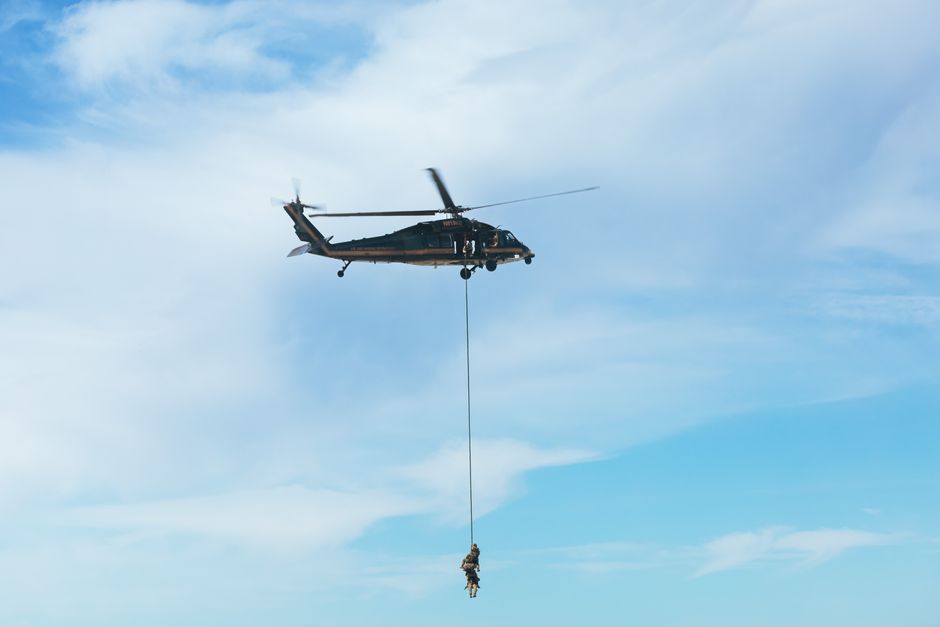
- Medical Evacuations (Medevac): When a patient is too ill to stay on the rig, you coordinate the logistics of getting them onto a helicopter or vessel safely.
- Administrative Reporting: Expect to spend time on the computer. Detailed record-keeping and health surveillance reports are mandatory for regulatory compliance.
Essential Qualifications for Offshore Rotational Medic Positions
You can’t simply walk onto a rig with just a nursing degree or paramedic license. The industry has very specific “gatekeeper” requirements. Most employers look for professionals with at least 2 to 3 years of post-graduate experience in high-pressure settings like the ICU, Emergency Room, or combat medicine.
Common backgrounds for successful applicants include:
- Registered Nurses (RN): Particularly those with A&E or ICU experience.
- Paramedics: NREMT-P or equivalent state licenses are highly valued.
- Ex-Military Medics: Those who have served as CMT1s or independent medical technicians in the armed forces often find the transition seamless.
Mandatory Safety and Medical Certifications
Before you apply for offshore rotational medic positions, you need a “survival” portfolio. These certifications prove you can survive the environment and handle the specific medical challenges of the sea.
- BOSIET (Basic Offshore Safety Induction and Emergency Training): This is the “big one.” It includes helicopter underwater escape training (HUET), sea survival, and fire fighting.
- HSE Offshore Medic Certificate: Required specifically for the North Sea and many international waters, this course bridges the gap between onshore medicine and the specific legal and clinical requirements of a rig.
- MIST (Minimum Industry Safety Training): A standard safety awareness course for the offshore oil and gas industry.
- ACLS & PHTLS: Advanced Cardiovascular Life Support and Pre-Hospital Trauma Life Support are non-negotiable.
- OGUK Medical: You must pass a specific physical exam to prove you are fit to work in a remote, offshore environment.
Navigating Rotations, Compensation, and Global Locations
One of the biggest draws of offshore rotational medic positions is the compensation package. In 2026, salaries typically range from $70,000 to $120,000 annually. This usually includes your travel to and from the “heliport,” all meals (which are notoriously good on rigs), and private or semi-private accommodation.
| Rotation Type | Weeks On | Weeks Off | Best For |
|---|---|---|---|
| 2:2 | 2 | 2 | Local North Sea / Gulf of Mexico |
| 3:3 | 3 | 3 | International projects |
| 4:4 | 4 | 4 | Middle East / West Africa |
| 6:6 | 6 | 6 | Very remote or specialized vessels |
Typical Schedules for Offshore Rotational Medic Positions
The “even-time” rotation (e.g., 2 weeks on, 2 weeks off) is the industry gold standard. It allows for a work-life balance that is impossible in traditional 9-to-5 roles. However, be prepared for 12-hour shifts while on the rig, and remember that you are “on-call” 24/7 for emergencies during your entire hitch.
Top Locations for Offshore Rotational Medic Positions
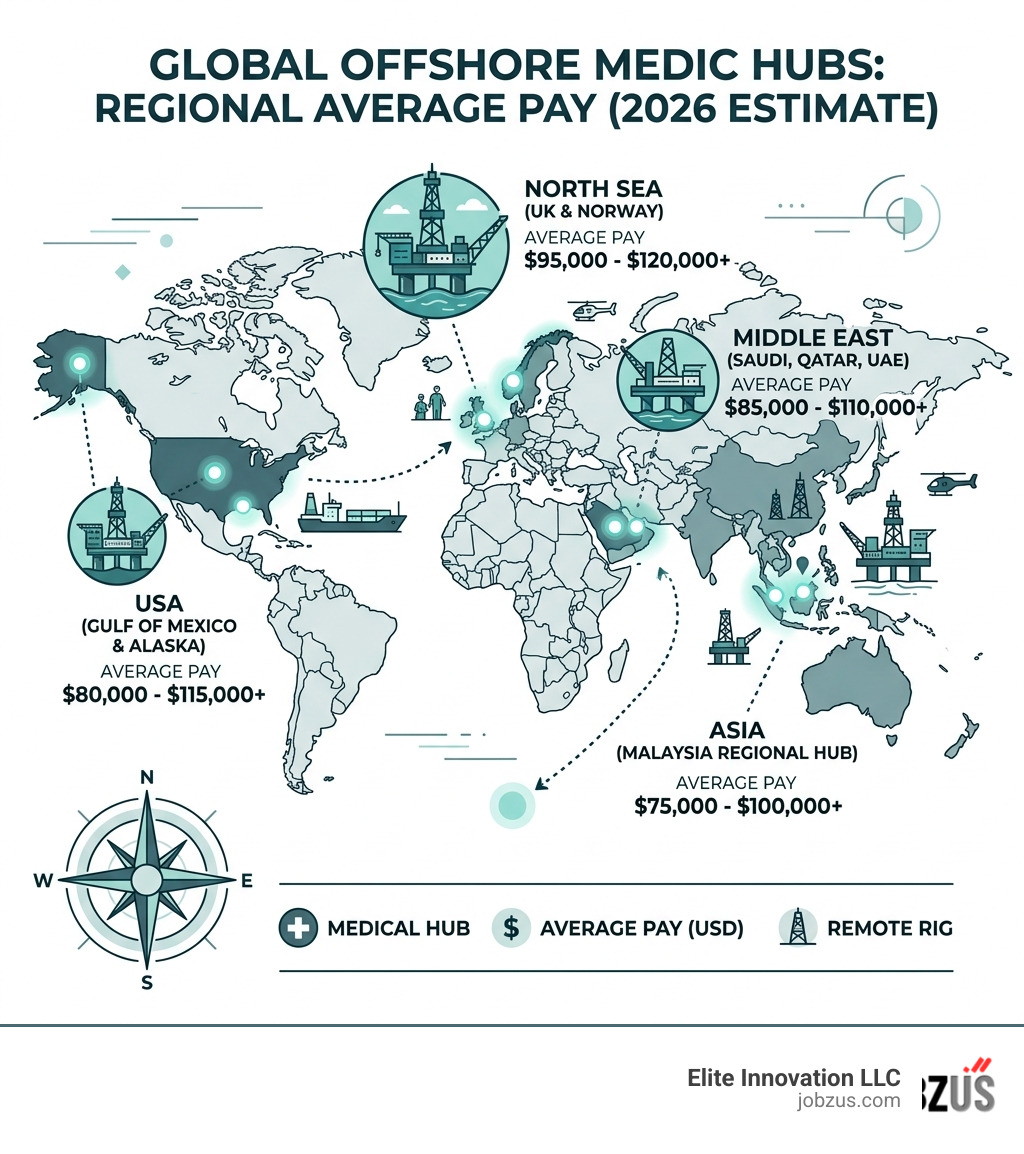
While the work is global, certain hubs dominate the market. Our focus at Elite Innovation LLC includes key regions where we see the highest demand:
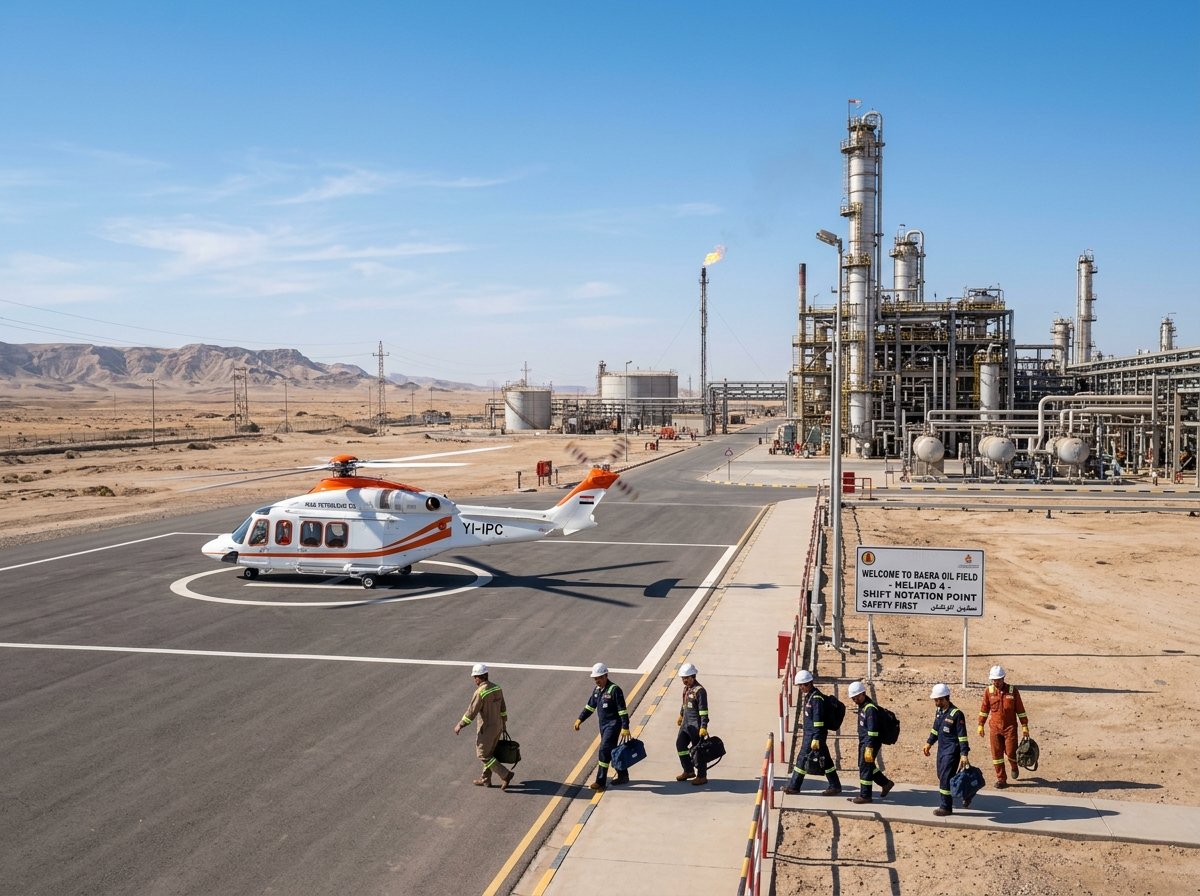
- The Middle East: Massive offshore projects in Saudi Arabia, Qatar, and the UAE require ADNOC-approved medics.
- The North Sea: A mature market with very high safety standards (UK and Norway).
- USA (Gulf of Mexico & Alaska): From the warm waters of Texas to the rugged Arctic sites, the US offers diverse environments.
- Asia: Malaysia remains a central hub for offshore energy services in the region.
How to Apply and Land Your First Offshore Contract
Landing your first contract is often the hardest part. The industry relies heavily on “proven” experience. If you don’t have offshore experience yet, look for “ad-hoc” roles. These are short-term cover positions (sometimes just a few days or weeks) that allow you to get your foot in the door and build your resume.
Top Industry Employers and Sectors
Several types of companies hire for offshore rotational medic positions:
- Specialized Medical Agencies: Global medical staffing agencies manage medical personnel for many of the world’s oil giants.
- Drilling Contractors: Companies that own the rigs themselves often hire their own medical staff.
- Vessel Operators: Specialized ships (like Cable Layers or Subsea Support Vessels) require medics for their crews.
- Renewable Energy: The offshore wind sector is a rapidly growing employer for medics in the North Sea and beyond.
To increase your chances, register your CV on specialized industry job boards and talent portals. Ensure your profile highlights your emergency experience and lists every valid certification you hold.
Pros, Cons, and Challenges of Remote Medicine
Working in offshore rotational medic positions isn’t just a job; it’s a lifestyle.
The Pros:
- Time Off: Having half the year off is an incredible perk for travelers and those with families.
- Financial Stability: High salaries and zero living expenses while on rotation allow for significant savings.
- Professional Growth: You will develop clinical skills and decision-making abilities that far exceed those of an average clinic medic.
The Cons:
- Isolation: You are away from family for weeks at a time, often missing birthdays or holidays.
- High Pressure: When things go wrong, you are the one everyone looks to. There is no “calling for backup” in the traditional sense.
- Multicultural Teams: You’ll work with people from all over the world. While rewarding, it requires excellent communication skills and cultural sensitivity.
Frequently Asked Questions about Offshore Medics
What is the average salary for an offshore medic in 2026?
In 2026, the average salary ranges between $70,000 and $120,000. Experienced medics on specialized projects or in high-risk areas can earn even more.
Do I need offshore experience to get my first job?
It helps, but everyone starts somewhere. To get your first break, ensure you have strong emergency/trauma experience onshore and all your mandatory offshore certifications (BOSIET, etc.) ready to go. Ad-hoc or “standby” roles are the best way to gain that initial experience.
Which certifications are most important for international roles?
BOSIET is the universal requirement for sea survival. For medical credentials, the HSE Offshore Medic Certificate and ACLS are the most widely recognized across the Middle East, USA, and Europe.
Conclusion
Transitioning your medical career to an offshore rotation is a bold move that offers unparalleled rewards. By focusing on the right certifications, gaining emergency experience, and targeting the high-growth hubs like the Middle East and the North Sea, you can secure a position that offers both adventure and financial security.
At Elite Innovation LLC, we understand the unique demands of the rotational lifestyle. Whether you are a paramedic in New York or a nurse in Muscat, the path to the sea is open if you have the grit and the qualifications to take it.
Ready to see what’s out there? Explore more rotational jobs and start your journey toward a career on the waves.