

Warehouse Loading Unloading Jobs in April 2026: What You Need to Know
Warehouse loading unloading jobs are one of the most in-demand entry-level positions in the U.S. right now. If you want a quick look at what’s available, here are the top employers actively hiring:
| Employer | Role | Typical Pay |
|---|---|---|
| Amazon | Dock Worker – Unloader | $19-$23/hr |
| FedEx | Package / Freight Handler | Competitive hourly |
| UPS | Package Handler / Warehouse Worker | Weekly pay + benefits |
| Home Depot | Warehouse Associate | Varies by location |
| McLane Company | Warehouse Loader | $20+/hr |
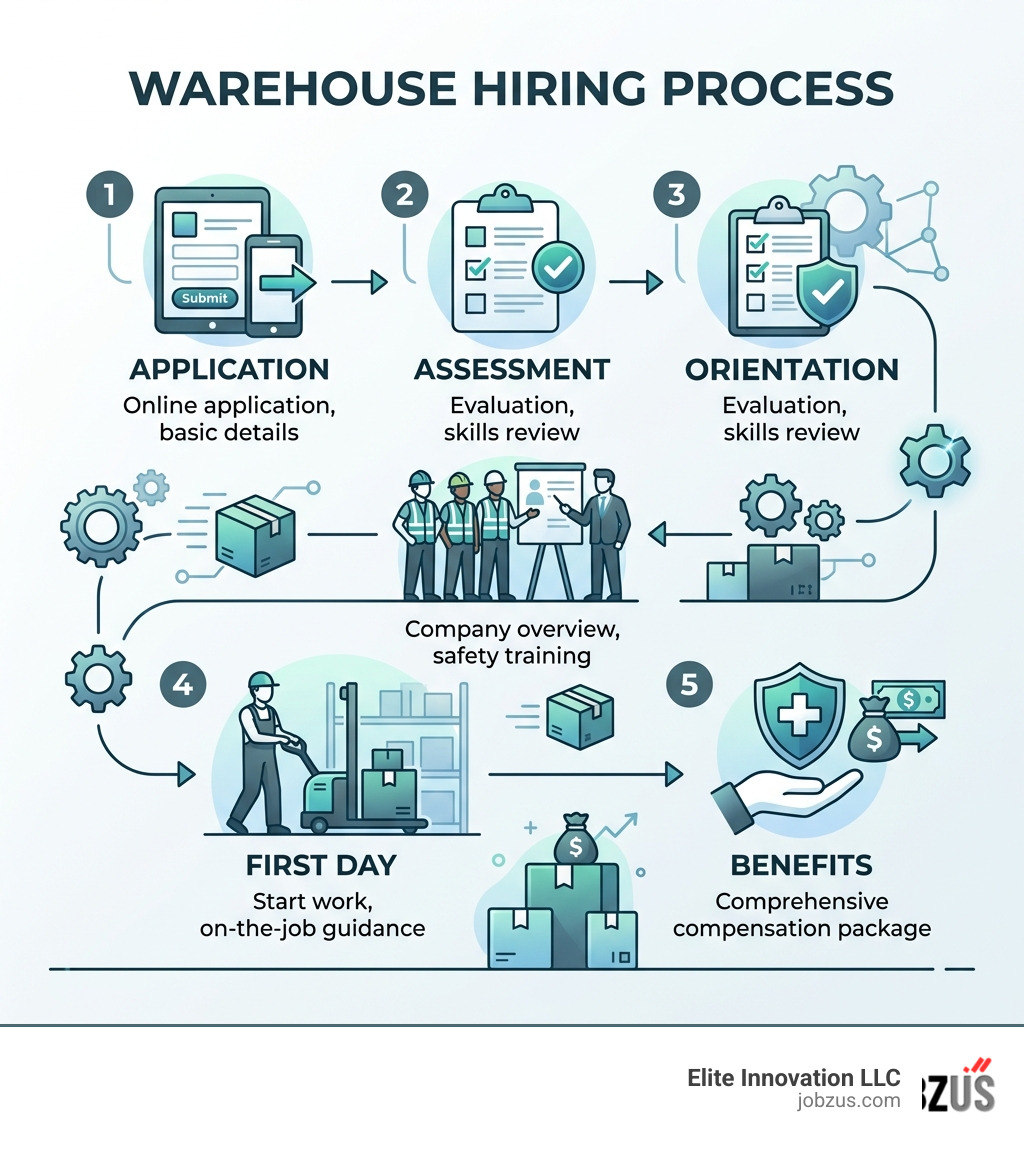
These roles don’t typically require a degree or prior experience. Most employers offer paid training, and many — like Amazon — have a hiring process with no resume or interview required.
The demand for warehouse workers is strong. Supply chains run 24/7, and someone has to move the freight. Whether you want full-time, part-time, seasonal, or overnight shifts, there are options across a wide range of employers and locations.
The sections below break down everything you need to know — from daily duties and physical requirements to pay structures and how to actually get hired.
Primary Responsibilities in Warehouse Loading Unloading Jobs
When we talk about warehouse loading unloading jobs, we are describing the “front line” of the global supply chain. Without these roles, products would never make it from the manufacturer to the store shelf or your front door. In April 2026, the responsibilities have become more tech-integrated, but the core mission remains the same: moving freight safely and efficiently.

Trailer Unloading and Freight Handling
The primary task for an unloader is managing the “inbound” dock. This involves emptying 53-foot trailers as they arrive at the facility. Depending on the company, this might involve “floor-loaded” trailers where boxes are stacked from floor to ceiling, or palletized freight. Workers often use telescoping conveyor belts that reach deep into the trailer, allowing them to place boxes directly onto a moving line for sorting.
Bulk Materials and Container Stripping
For those working as a Bulk Materials Unloader, the job might involve more specialized equipment. This includes connecting hoses for liquids or using winches and loaders to move heavy raw materials. “Container stripping” is another common term, referring to the rapid unloading of international shipping containers to keep port operations moving.
Warehouse Loader Duties
On the “outbound” side, loaders are responsible for the puzzle-like task of filling trailers. As a Warehouse Loader, you must build stable “walls” of product. If the wall isn’t stable, the load could shift during transit, causing damage or injury when the next person opens the door.
Key daily tasks include:
- Equipment Inspection: Before every shift, we must check electric pallet jacks, forklifts, and dock plates for safety.
- Palletizing and Sorting: Organizing loose boxes onto pallets and securing them with shrink wrap.
- Inventory Accuracy: Verifying product counts against shipping manifests to ensure the right items are going to the right place.
- Dock Plate Safety: Ensuring the heavy metal plates that bridge the gap between the dock and the trailer are secured, wheels are chocked, and safety tethers are in place.
Top Companies and Sectors Hiring for Loading and Unloading Roles
The logistics sector is massive, spanning from New York to Muscat and the Middle East. Whether you are looking for warehouse jobs in New York or unloading vacancies in Saudi Arabia, the types of facilities generally fall into a few categories.
| Sector | Primary Focus | Common Shift Types |
|---|---|---|
| Fulfillment Centers | Individual customer orders | 10-12 hour “megashifts” |
| Sortation Hubs | Diverting packages to local stations | Fast-paced, 4-6 hour “sorts” |
| Retail Distribution | Supplying big-box stores | Consistent day/night rotations |
| Air Cargo Docks | High-speed aircraft loading | Time-sensitive, 24/7 operations |
Major Employers
- Amazon: Known for its Dock Worker – Unloader | Amazon roles, Amazon focuses on high-tech environments. Their “Inbound Dock” is the front door of their operation.
- FedEx and UPS: These giants rely on Warehouse Workers | United Parcel Service – UPS Jobs to handle millions of parcels. FedEx offers specialized roles like Ramp Handlers for aircraft and Freight Handlers for heavy trucking.
- Home Depot: With over 2,200 stores, they hire Warehouse Associates to manage the massive flow of home improvement goods.
- Third-Party Logistics (3PL): Many logistics providers operate globally, often providing specialized unloading services within other companies’ warehouses.
For a deeper dive into these roles, check out The Ultimate Guide to Loading Unloading Work Jobs.
Entry-Level Warehouse Loading Unloading Jobs Requirements
You don’t need a fancy degree to start in this field, but you do need “warehouse stamina.” The standard requirements for material handling provide a good baseline for what we expect globally:
- Physical Capacity: You must be able to lift between 25 and 100 lbs. While 100 lbs usually requires “team lifting,” you should be comfortable handling 50 lbs solo throughout a shift.
- Age and Legal: Most roles require you to be at least 18 years old. In the USA and Middle East, you’ll typically undergo a background check and drug screening.
- Communication: English proficiency is often required for safety reasons—you need to read warning signs and communicate with equipment operators.
- Availability: Many warehouse loading unloading jobs require working weekends, holidays, or overnight hours.
Career Growth from Warehouse Loading Unloading Jobs
Don’t think of this as “just a manual labor job.” It is a gateway to a long-term career. Many store managers at major retailers started as freight associates.
- Skill Development: You will learn to operate heavy machinery, which is a highly marketable skill.
- PIT Certification: Getting certified to operate Powered Industrial Trucks (forklifts, reach trucks, etc.) usually leads to an immediate pay bump.
- Supervisory Paths: High-performing unloaders often move into “Lead” or “SVP” (Supervisor) roles within 12-18 months.
- Logistics Management: Understanding how a dock works is the best training for becoming an Operations Manager or Supply Chain Analyst.
Explore more about advancement in our guide on Loading Unloading and General Staff or browse Tag: Loading and Unloading Jobs.
Compensation, Benefits, and Pay Structures
In April 2026, the competition for reliable workers has driven pay rates higher than ever. Whether you’re looking at warehouse assistant jobs in Malaysia or roles in the USA, the compensation packages are becoming very attractive.
Hourly Wages and Weekly Earnings
The standard pay for a warehouse loading unloading job currently ranges from $19 to $23 per hour in the USA. This equates to roughly $44,700 per year for full-time roles. Many companies, such as UPS, provide weekly pay, which is a huge benefit for those who need consistent cash flow.
Production-Based Pay
Some companies use a production-pay model. This means you are paid “by the truck” or based on the volume you move. High-energy workers in these environments can often earn over $900 per week. If you work hard and move fast, your paycheck reflects that effort directly.
Comprehensive Benefits
Modern warehouse roles offer more than just a paycheck. Benefits often include:
- Healthcare: Medical, dental, and vision, sometimes starting on day one (Amazon) or after 60 days (McLane).
- Financial: 401(k) matching and employee stock purchase programs.
- Education: Tuition reimbursement is becoming a standard perk. Companies like UPS and Home Depot offer significant money for college.
- Immediate Pay Access: Some employers allow you to access up to 70% of your earned wages immediately after your shift, rather than waiting for payday.
Essential Safety and Technology in Modern Warehousing
Safety is the number one priority in modern warehouses. We’ve moved past the days of just “gritting your teeth” through the pain. Today, technology helps reduce the physical strain of warehouse loading unloading jobs.
Advanced Tools and Ergonomics
- ErgoPick and Robotic Arms: In some advanced fulfillment centers, robotic arms assist with the heaviest lifting, while ergonomic vacuum lifts help move bulky items without straining your back.
- Height-Adjustable Workstations: These allow workers of different heights to process packages without constant bending or reaching.
- PIT Training: Powered Industrial Truck training ensures that every forklift operator knows exactly how to navigate a busy dock without risking the safety of pedestrians.
Safety Protocols
- Climate Control and Gear: For those in “cold chain” logistics (working in freezers or coolers), companies provide specialized thermal gear.
- Hydration Protocols: Because this work is high-intensity, staying hydrated is essential. Most warehouses provide industrial-sized water stations and mandate regular “water breaks.”
- PPE Requirements: Steel-toed or composite-toed boots with non-slip soles are non-negotiable. Many companies also require high-visibility vests and gloves.
Frequently Asked Questions about Warehouse Work
What is production-based pay in a warehouse?
Production-based pay is a system where your earnings are tied to your output rather than just the hours you spend on the clock. For example, an unloader might be paid a flat rate for every trailer they successfully empty. This rewards speed and efficiency, allowing high-performers to earn significantly more than the base hourly rate.
Do I need experience to get a warehouse loading job?
Generally, no. Most warehouse loading unloading jobs are entry-level. Employers are looking for reliability, physical stamina, and a willingness to learn. They will provide the necessary training for equipment like electric pallet jacks and scanners during your first week.
What are the typical shift schedules for unloaders?
Schedules vary wildly to keep the supply chain moving 24/7. Common options include:
- The “Key” Shift: Monday through Thursday, often 4:00 pm until the job is finished.
- Weekend Warrior: Friday through Sunday, usually 12-hour shifts.
- Night Sort: Short, high-intensity shifts (e.g., 10:00 pm to 3:00 am) common in parcel hubs like FedEx or UPS.
Conclusion
As we move through April 2026, warehouse loading unloading jobs continues to offer a stable, high-growth career path for those willing to put in the work. From the docks of New York to the distribution hubs of Qatar and Saudi Arabia, the opportunities are vast. Whether you are drawn by the $900+ weekly earning potential, the immediate health benefits, or the chance to climb the ladder into supply chain management, there has never been a better time to join the industry.
Elite Innovation LLC is committed to helping you find your place in this essential workforce. The logistics industry is the backbone of the global economy, and every box moved is a step toward a successful career.
Ready to start your career? Explore our Loading Unloading and General Staff opportunities today!
