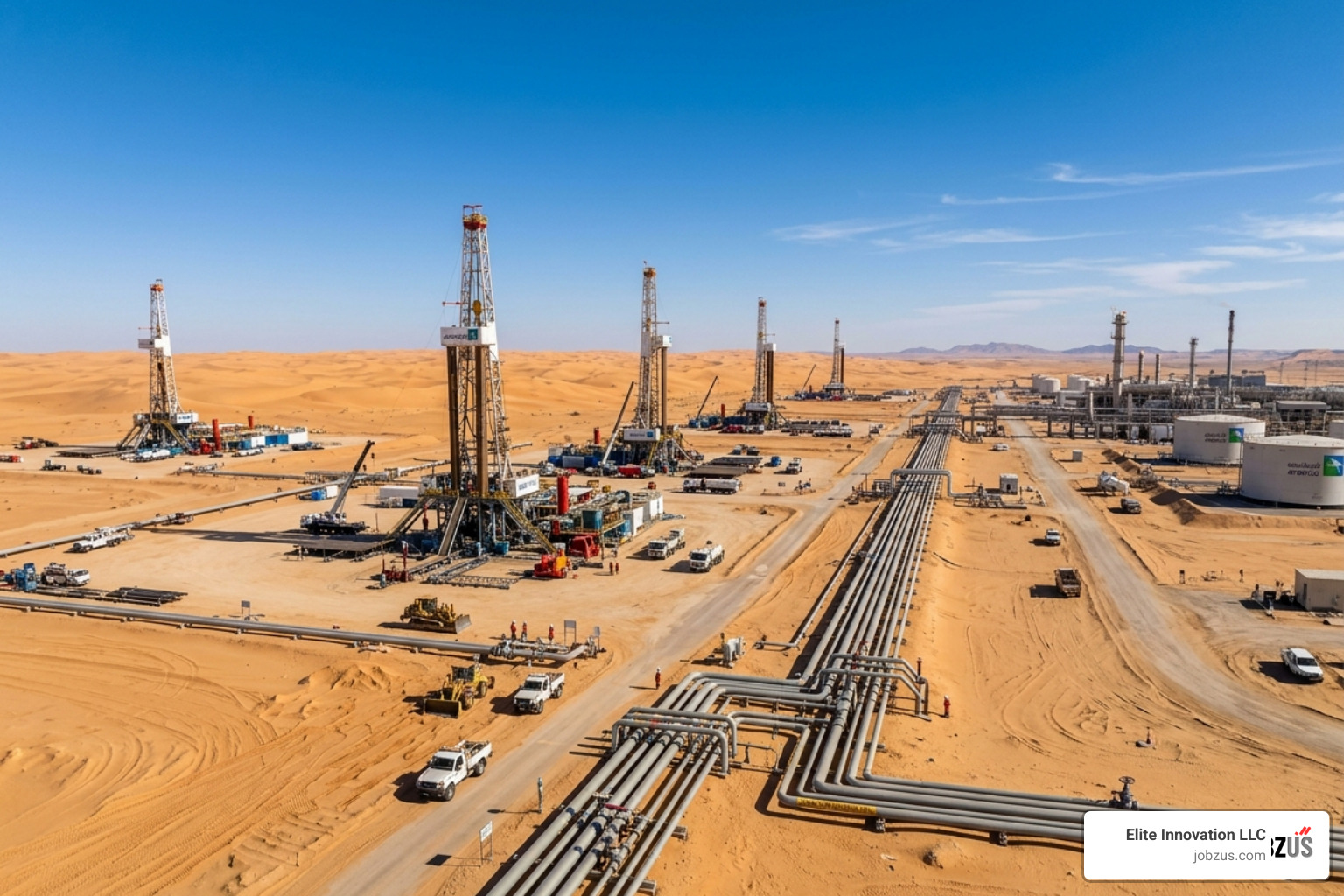

Why Middle East Jobs Oil and Gas Are Worth Pursuing in 2026
Middle east jobs oil and gas are among the most in-demand opportunities for workers worldwide right now, with over 420 active listings across specialized industry platforms as of early 2026.
If you want a quick overview of what’s available, here are the top entry points:
| Job Type | Key Location | Experience Needed |
|---|---|---|
| Driller / Rig Hand | Qatar, UAE | 3-5 years |
| MPD Engineer | Saudi Arabia | 5-10 years |
| Reservoir Engineer | Saudi Arabia | 10-20 years |
| Senior Reliability Engineer | Saudi Arabia | 12+ years |
| Project Engineer | UAE | 6-7 years |
The region is hiring right now — and not just for senior roles. There are openings across drilling, maintenance, production support, and field operations.
The Gulf states — Saudi Arabia, UAE, Qatar, Oman — continue to pour investment into energy infrastructure. That means stable, well-paying work with benefits like housing, visa sponsorship, and rotation schedules that give you real time off.
But breaking in takes preparation. Knowing which skills to build, which platforms to use, and what employers actually want can make the difference between getting hired and getting ignored.
This guide covers 10 practical tips to help you land your first — or next — role in the region’s energy sector.
1. Target High-Growth Hubs for Middle East Jobs Oil and Gas
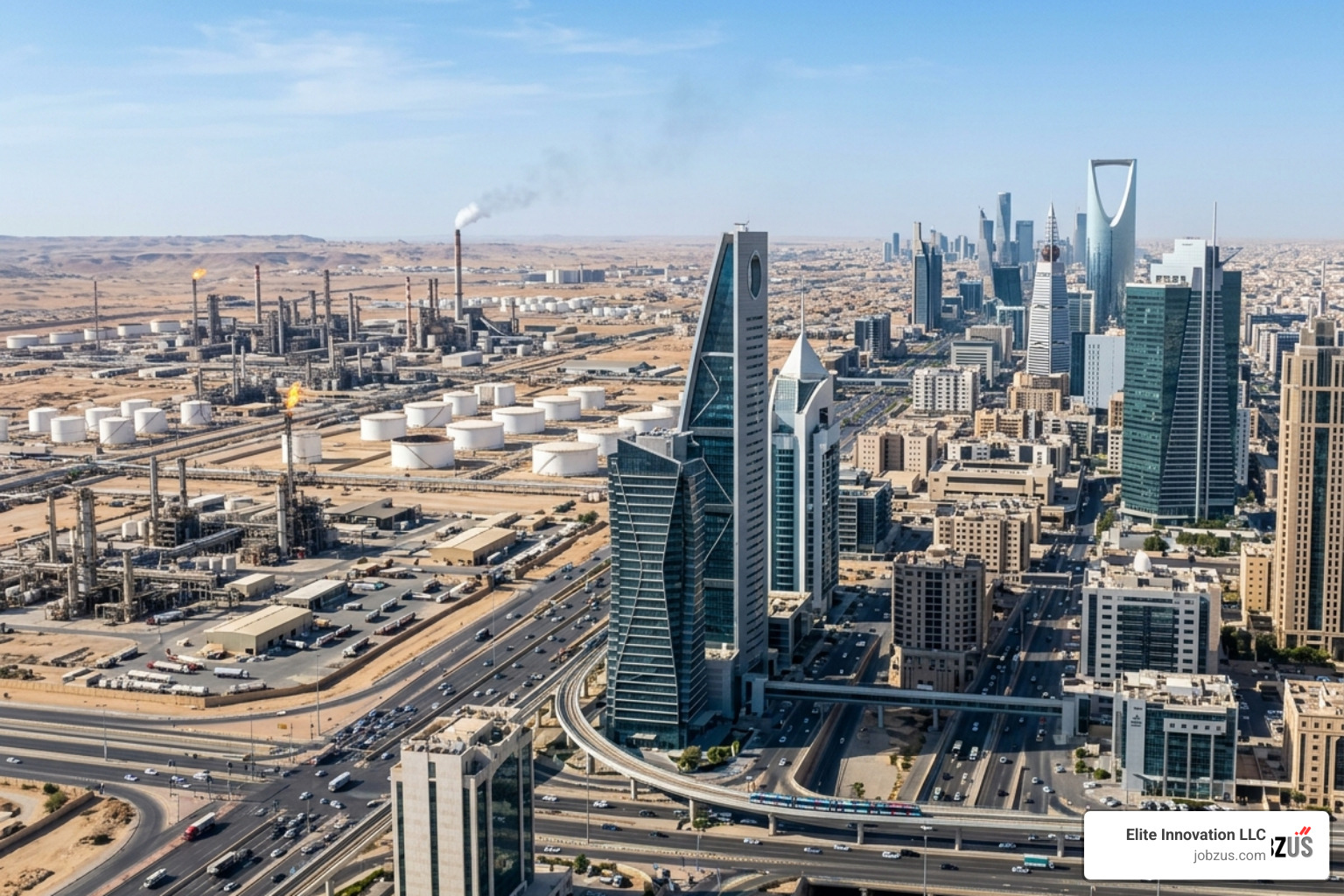
If you are looking for the highest volume of opportunities, you need to point your compass toward the heavy hitters of the Gulf. As of April 2026, the market is heavily concentrated in a few key nations that are expanding their production capacities.
Saudi Arabia: The Industry Titan
Saudi Arabia remains the undisputed king of middle east jobs oil and gas. With massive projects like the expansion of the Marjan and Berri fields, the demand for technical talent is insatiable. We see a massive influx of roles for Reservoir Engineers and Reliability Engineers here. If you are aiming for the top, check out the latest Oil and Gas Jobs in Saudi Arabia to see where the Kingdom is investing its billions.
United Arab Emirates (UAE)
The UAE, particularly Abu Dhabi, is a hub for both onshore and offshore operations. There is a specific focus here on EPC (Engineering, Procurement, and Construction) projects. Roles like QC Coordinators and Site Managers are frequently listed in Sharjah and Dubai. For those looking for diverse engineering roles, exploring Oil and Gas Jobs in UAE is a great starting point.
Qatar and Oman
Qatar is currently a world leader in Liquified Natural Gas (LNG), creating a surge in Oil and Gas Jobs in Qatar. Meanwhile, Oman is focusing heavily on enhanced oil recovery (EOR) and commissioning projects. If you are interested in the Omani market, keep an eye on Oil and Gas Jobs Oman.
2. Master Specialized Technical Skills and AI Integration
The “old school” way of drilling is evolving. In 2026, the most lucrative middle east jobs oil and gas go to those who can bridge the gap between traditional mechanical engineering and high-tech data science.
Managed Pressure Drilling (MPD)
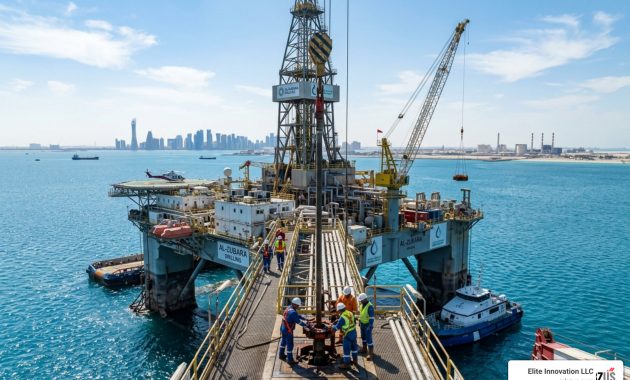
MPD and Underbalanced Drilling (UBD) are no longer “niche” — they are standard requirements for many offshore jack-up rigs in the UAE and Saudi Arabia. Companies are actively seeking MPD Supervisors and Engineers (levels FE2 and FE3) who can lead wellsite decision-making and oversee pressure control strategies.
The Digital Frontier: AI and ML
Believe it or not, your ability to code might be as important as your ability to weld. Major employers like Saudi Aramco are prioritizing candidates who understand AI/ML and data analytics for reservoir management. They are using these tools to maximize hydrocarbon recovery and optimize well spacing in unconventional reservoirs. If you are a Reservoir Engineer, highlighting your experience with fracture modeling and AI-driven simulation will put you at the top of the pile.
3D Laser Scanning and LiDAR
For project engineers, knowledge of 3D Laser Scanning and GPR (Ground Penetrating Radar) is increasingly sought after for industrial asset integrity. Being able to manage complex geospatial data is a massive “plus” for anyone looking at Civil Plant Inspection Engineers Jobs Qatar.
3. Obtain Essential Certifications and Qualifications
You can’t just “wing it” in the Middle East energy sector. The safety standards are world-class, and the certification requirements are strict. Most senior roles, such as a Senior Reliability Engineer – Petro Rabigh, require at least 12 years of experience and a Bachelor’s degree in Engineering.
Top Certifications to Chase
- CMRP / CRL: Certified Maintenance & Reliability Professional. This is “strongly preferred” for asset management roles.
- NEBOSH / IOSH: Essential for anyone looking into HSE (Health, Safety, and Environment). Check out these 10 Dos and Don’ts for HSE Jobs in Oil and Gas to understand the safety culture.
- IWCF / IADC: These are the “gold standard” for well control and drilling roles.
Qualification Comparison Table
To help you plan your education and training, here is how two of the most popular roles compare:
| Requirement | Drilling Engineer | Reservoir Engineer |
|---|---|---|
| Education | B.Sc. Petroleum/Mechanical Eng | B.Sc. Petroleum Engineering |
| Experience | 5-15 years (Offshore/Onshore) | 10-20 years (Unconventional focus) |
| Key Skills | Well construction, Casing design | Simulation, Fracture modeling, AI |
| Software | Landmark, Compass | ECLIPSE, Kappa, IHS Harmony |
If you are just starting, don’t be discouraged. There are specific pathways for newcomers, which you can explore in A Freshers Guide to Qatar’s Energy Sector.
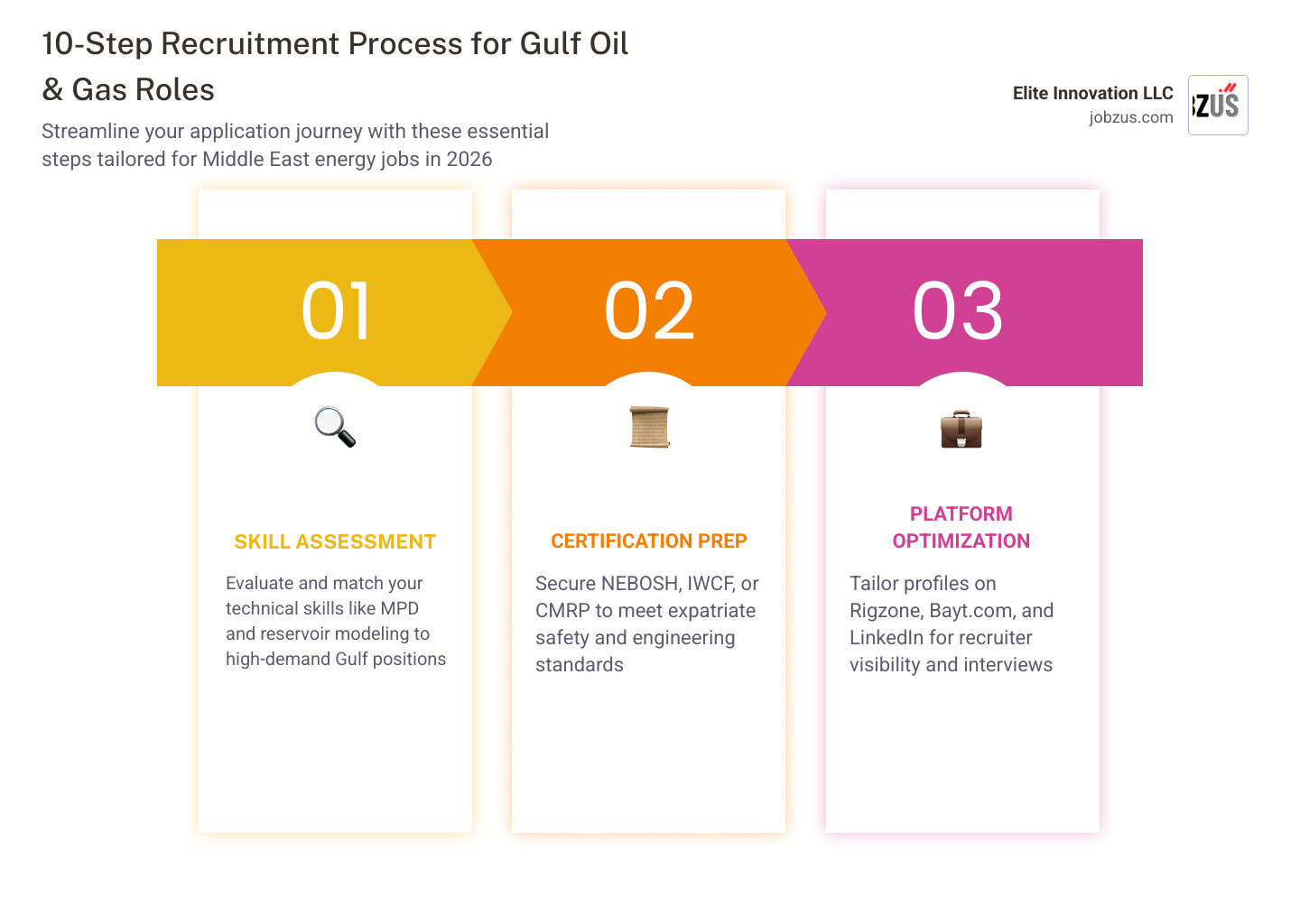
4. Optimize Your Profile for Middle East Jobs Oil and Gas Platforms
Applying for a job in the Middle East isn’t just about clicking “Apply” on generic boards. You need to be where the recruiters are.
- Direct Employer Portals: For the biggest opportunities, go straight to the source. Portals like Aramco Careers are the primary way to land a role at the world’s largest producer. Most major national oil companies (NOCs) in the region prioritize applications through their own career sites.
- Specialized Recruitment Agencies: Partnering with agencies that understand the local landscape is crucial. For more help, look at Your Shortcut to the Top Qatar Oil and Gas Recruitment Agencies.
- Internal Job Boards: Keep an eye on specialized listings for Drilling Engineers and other technical roles directly on regional energy career pages.
Pro Tip: Use keywords like “unconventional,” “offshore jack-up,” and “asset integrity” in your CV. Many recruiters in the region use automated filters to find candidates with specific technical experience.
5. Understand Expatriate Benefits and Rotation Schedules
One of the biggest draws of middle east jobs oil and gas is the compensation package. We aren’t just talking about the salary; it’s the lifestyle support that comes with it.
The 28/28 Rotation
For field roles, especially in Iraq or offshore UAE, the 28/28 rotation is common. You work for 28 days straight (often 12-hour shifts) and then get 28 days of paid leave, with flights back to your home country included. This is a staple for Oil Gas Field Operations Rotation 28-28 Jobs Iraq.
Benefits and Tax
Most Gulf countries offer tax-free salaries (though you should check your home country’s tax laws). Typical packages include:
- Housing Allowance: Either a cash sum or company-provided villa/apartment.
- Education Allowance: For expats with children, many companies cover school fees.
- Relocation Support: Comprehensive visa sponsorship and shipping for your household goods.
Companies like Worley Onshore and Offshore Jobs UAE are known for providing robust support for international hires.
6. Align with Sustainability and Decarbonization Trends
The industry is changing. In 2026, “Oil and Gas” also means “Energy Transition.” Saudi Aramco and other regional leaders are touting the lowest upstream carbon intensities in the world.
CO2 Sequestration and Clean Energy
Reservoir engineers are now being asked to model CO2 sequestration and black oil simulation for carbon capture projects. If you have experience in “clean energy drilling,” you are a hot commodity. Organizations like SABIC Chemicals and Petrochemicals Jobs are leading the way in sustainable chemical production.
Future-Proofing Your Career
The demand for Technip Energies Oil Gas Jobs Opportunities in Qatar often focuses on EPC projects that incorporate green technology. By pivoting your skills toward sustainability now, you ensure that your career remains relevant for the next 30 years.
Frequently Asked Questions about Middle East Jobs Oil and Gas
What are the highest paying middle east jobs oil and gas roles?
Generally, Petroleum Engineers, Drilling Supervisors, and Project Managers command the highest salaries. A Reservoir Management Engineer at a top firm can expect a predicted salary range of $72,000 to $108,000 USD per year, often tax-free and with full benefits. To learn more about maximizing your earnings, see How to Secure High-Paying Petroleum Jobs in Qatar.
Which companies are the top employers in 2026?
The leading employers remain major national oil companies and large international energy contractors across the Gulf. Saudi Aramco, QatarEnergy, and ADNOC continue to offer a wide range of roles, while many engineering, drilling, and field services employers are also hiring across the region. For specific leads, check out Saudi Aramco Oil and Gas Jobs.
Do I need prior experience for middle east jobs oil and gas?
While many roles require 10-12 years of experience, there are graduate programs and entry-level technician roles available. Junior positions in HSE or maintenance are great “foot-in-the-door” opportunities. Explore Oil Gas Jobs in Bahrain and Oman for a variety of experience-level requirements.
Conclusion
The market for middle east jobs oil and gas in 2026 is vibrant, tech-driven, and highly rewarding. Whether you are a seasoned Reservoir Engineer or an aspiring Driller, the opportunities in Saudi Arabia, Qatar, and the UAE offer a path to financial stability and professional growth.
At Elite Innovation LLC, we understand that navigating the Gulf energy sector can be daunting. By focusing on specialized skills like MPD, obtaining the right certifications, and leveraging professional networking, you can position yourself as a top-tier candidate. The energy world is looking to the Middle East for leadership — and the Middle East is looking for you.
Ready to take the next step? Explore the latest opportunities and start your application today.